
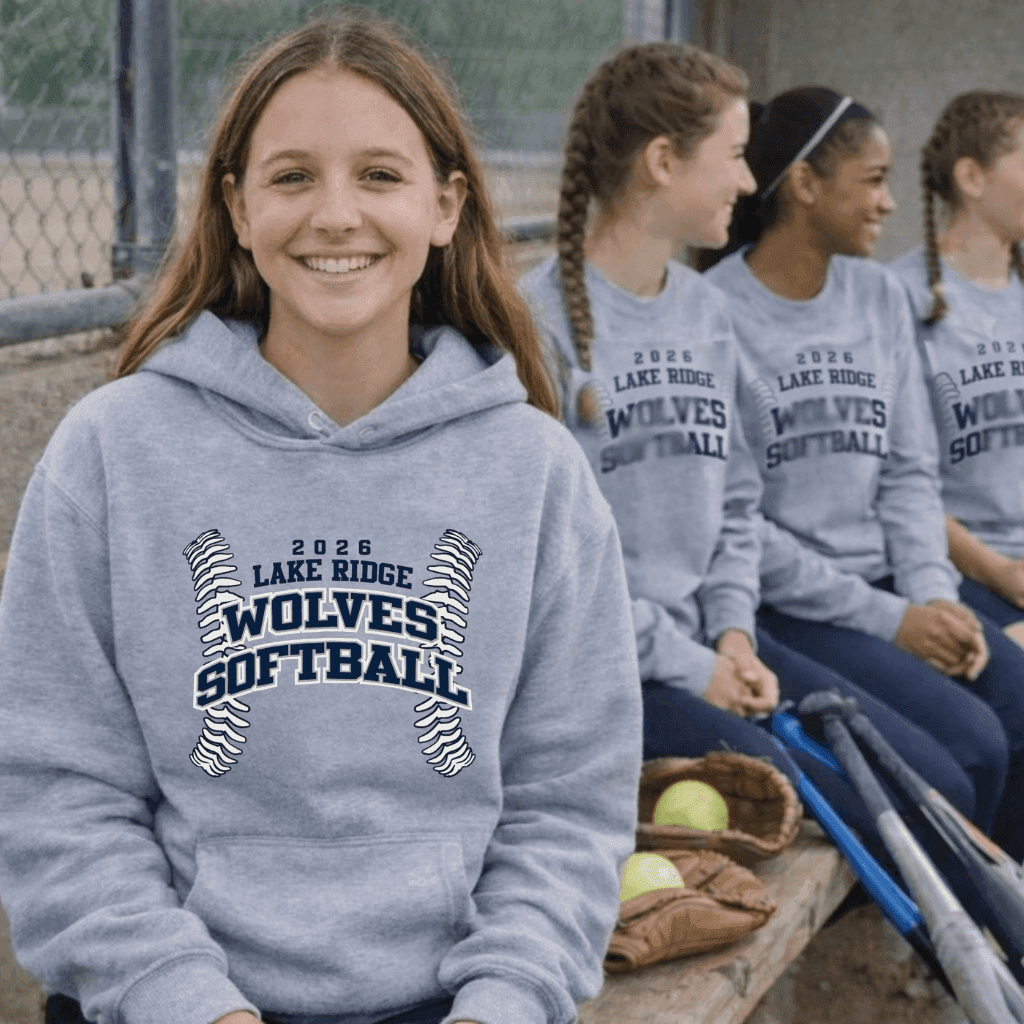
What is puff print?
Puff print is a type of screen printing that leaves a raised, three-dimensional print on the garment. The ink, usually plastisol, is mixed with a puff additive, or bought as a ready-made puff ink. The additive is made of tiny spheres that expand when they reach a set temperature, so the print lifts off the fabric as it cures.
The result is soft and slightly rounded, with a matte, foam-like feel that you notice when you run a hand over it. It is popular on hoodies, sweatshirts, t-shirts and caps, especially for collegiate lettering, logos and streetwear graphics. You will also hear it called 3D print, although that name is sometimes used for high-density print too.
How puff print is made
How puff print rises
1. Print
A thick layer of plastisol ink mixed with puff additive is printed through the screen.
2. Heat
In the dryer, tiny spheres in the additive expand and lift the ink.
3. Raised print
The ink cures raised, soft and slightly rounded, with a matte, foam-like feel.
- Artwork and screens. The design is separated into colors, and a screen is made for each one. Puff usually needs a coarser mesh or a thicker stencil, so more ink goes down.
- Printing. The puff ink is pushed through the screen in a thick layer. Flat colors for fine detail can be printed in the same pass.
- Curing. The garment runs through a dryer. The heat expands the additive and cures the ink, so the print rises and sets.
- Testing. Ink makers set the temperatures at which their additives start to puff and fully cure, and the rise changes with the dryer, so a test print comes before the run.
Which designs work best
- Bold shapes and thick lettering. The ink spreads a little as it rises, so thin lines fill in and small text blurs.
- Space between elements. Leave gaps between letters and shapes so they do not merge when they puff.
- Puff for the hero, flat ink for the detail. Many designs puff the main logo and print fine lines, outlines or small text flat.
- One or two puff colors. Each color needs its own screen and its own test, so keep puff to the parts that matter.
- Moderate areas. Very large solid areas make the print heavier and less flexible than a logo-sized print.
Puff print vs high-density print vs 3D embroidery
| Method | How it is made | Look and feel | Best for |
|---|---|---|---|
| Puff print | Screen print with ink that expands under heat | Soft, rounded, matte and foam-like | Bold logos and lettering on tees, hoodies and caps |
| High-density (HD) print | Thick layers of ink built up through a thick stencil, without expanding | Sharp edges and a flat top | Crisp raised logos with clean edges |
| 3D puff embroidery | Satin stitches sewn over a layer of foam | Raised and stitched, very hard-wearing | Caps and small chest logos |
| Puff heat transfer vinyl | Cut puff film pressed on with heat | Raised and smooth, with no screens | One-offs and very small runs |
See our guide to screen printing vs DTG for how flat print methods compare on cost, and our caps page for 3D embroidery on hats.
Which garments and fabrics suit it
Puff print works best on cotton and cotton-rich blends: t-shirts, hoodies, sweatshirts and the front panels of caps. Fleece hoodies are a classic choice, because the raised print sits well on a heavier fabric.
On polyester and performance fabrics, ask for a test print first. The heat needed to make the ink rise can make dyes in the fabric bleed into the print, and some technical fabrics do not take the heat well.
Care and durability
A properly cured puff print flexes with the garment and lasts many washes. Under-cured ink is the usual cause of cracking or peeling, which is another reason to approve a sample before bulk production.
On the care label, recommend washing inside out at a cool temperature, tumble drying low or line drying, and never ironing directly on the print, which flattens the puff.
Cost and minimums
Puff print usually costs more than a flat print of the same design: it needs special ink, a thicker deposit, slower curing and a test print. Like any screen print, most of the setup cost is per design and per color, so it is shared across the order, and the price per piece falls as the quantity rises. Our MOQ guide shows how that works.
At Nevear the minimum is typically 50 pieces per item. Samples take 2–3 weeks, so you can check the rise, feel and color of the puff before the bulk order, which usually arrives 3–4 weeks from the order date, shipping included.