
What does MOQ mean?
MOQ stands for minimum order quantity. It is the smallest number of units a supplier will accept for a single order. If a factory's MOQ is 300 pieces, it will not take an order for 200.
The term is used across manufacturing and wholesale, from packaging to electronics. In clothing, the MOQ is usually set per style, and often per color as well, because every new design or colorway adds setup work in the factory.
MOQ is not the same as a minimum order value (MOV), which sets a minimum spend rather than a minimum number of pieces. Some suppliers use both, so check which one a quote refers to.
Why manufacturers set a minimum order quantity
An MOQ is not an arbitrary rule. Part of the cost of every production run is the same whether the factory makes 50 garments or 5,000. The minimum is the point at which an order covers that fixed work.
- Pattern and grading. The pattern is made, checked and graded into every size once per style.
- Cutting. A marker (the layout showing how pattern pieces sit on the fabric) is planned for each fabric and size mix, then the fabric is spread in layers and cut.
- Line setup. Machines are set up and operators learn the sequence of operations. The first garments on any line are the slowest, and output picks up as the run continues.
- Fabric and trims. Mills and trim suppliers have their own minimums. Custom-dyed fabric is usually sold in minimum lengths per color, and custom zips, buttons and labels have minimums too.
- Checks and paperwork. Approvals, inspections, packing and shipping documents take roughly the same time for a small order as for a large one.
What an order pays for
- 1
Pattern and grading
Once per style
- 2
Marker and cutting setup
Once per style
- 3
Machine and line setup
Once per style
- 4
Approvals, checks and paperwork
Once per style
- 5
Fabric, trims and sewing
Every piece
Factories built for long runs of a few styles set high minimums, because frequent changeovers slow them down. Production set up for shorter runs can accept lower minimums, usually at a higher price per piece.
Typical MOQs in clothing manufacturing
There is no single industry figure, but minimums fall into broad bands depending on how the garment is made.
| Type of production | Typical minimum | What you get |
|---|---|---|
| Print on demand | 1 piece | Your print on a standard blank garment. No custom fit, fabric or labels. |
| Decoration on stock blanks | Often 12 to 50 pieces per design | Screen printing or embroidery on an existing garment. |
| Small-batch cut and sew | Often 50 to 300 pieces per style | Your own pattern, fit, fabric choice and labels. |
| High-volume factory | Often 500 to 1,000+ pieces per style, sometimes per color | The lowest price per piece, with the largest upfront commitment. |
| Custom-developed fabric | Mill minimums per color, often hundreds of meters | Your own dyed or knitted fabric instead of a stock option. |
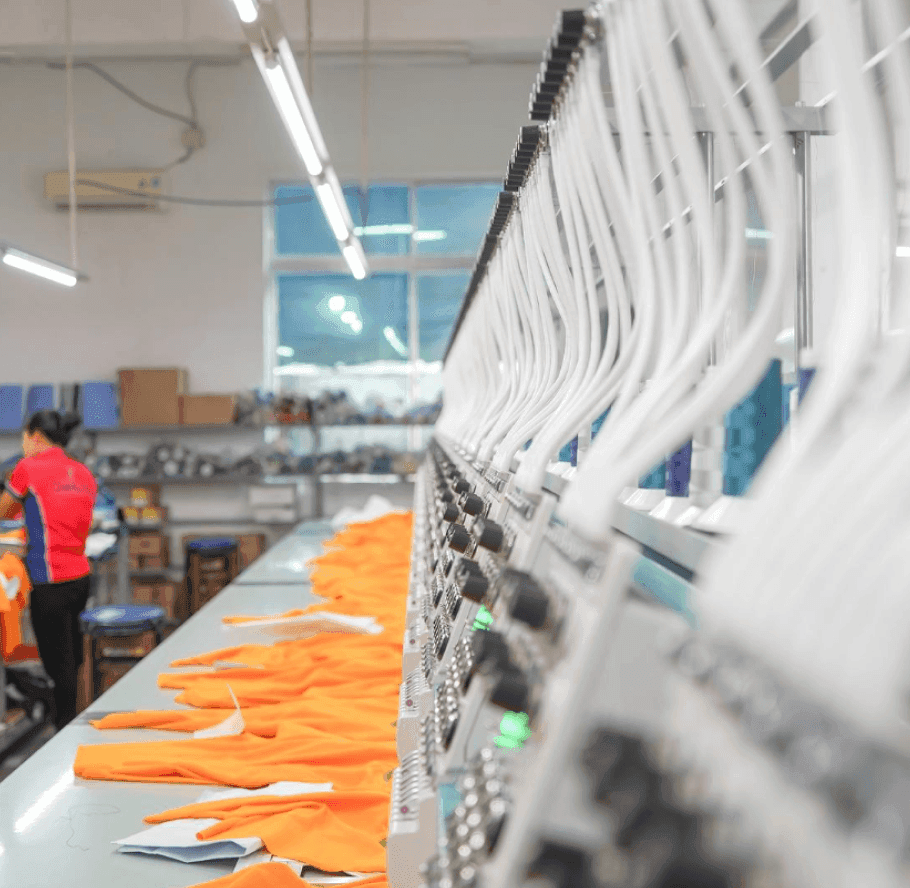
The product matters too. A t-shirt has few components and is simple to run in small numbers. A lined jacket with zips, snaps and taped seams needs more setup and more trims, so its minimum tends to be higher.
Per style, per color or per order: read the quote carefully
Two quotes can both say "MOQ 300" and mean very different orders. Before comparing suppliers, check what the minimum is counted against.
- Per order: the total across everything you order. The most flexible version.
- Per style: the minimum for one design, across all its colors and sizes.
- Per color: the minimum for each colorway of a style. A 300-per-color minimum on a hoodie in three colors means 900 hoodies.
- Per size: rare in clothing. Most suppliers let you spread a style's quantity across its size range, within reason.
One hoodie in three colors, MOQ 300
Counted per style
300 hoodies
Black 100 · Olive 100 · Navy 100
Counted per color
900 hoodies
Black 300 · Olive 300 · Navy 300
How MOQ affects your price per piece
Fixed costs are spread across every piece in the run, so the more pieces you order, the less of that fixed cost each one carries. The example below uses round numbers to show the effect: a fixed $600 per style for setup, plus $12 per piece for materials and sewing.
Price per piece by order size
50 pieces
Setup: $12.00 per piece
Materials and sewing: $12.00
Total: $24.00 per piece
100 pieces
Setup: $6.00 per piece
Materials and sewing: $12.00
Total: $18.00 per piece
300 pieces
Setup: $2.00 per piece
Materials and sewing: $12.00
Total: $14.00 per piece
1,000 pieces
Setup: $0.60 per piece
Materials and sewing: $12.00
Total: $12.60 per piece
| Order size | Fixed cost per piece | Total price per piece | Order total |
|---|---|---|---|
| 50 pieces | $12.00 | $24.00 | $1,200 |
| 100 pieces | $6.00 | $18.00 | $1,800 |
| 300 pieces | $2.00 | $14.00 | $4,200 |
| 1,000 pieces | $0.60 | $12.60 | $12,600 |
The price per piece falls quickly at first and then levels off. Going from 50 to 300 pieces saves far more per garment than going from 1,000 to 5,000. In real quotes, materials also get cheaper at volume, which this simple example leaves out.
That is why the lowest price per piece is not always the cheapest decision. In the example above, ordering 1,000 hoodies and selling 400 leaves 600 unsold, which is $7,560 of stock. Ordering 400 instead would have cost $0.90 more per piece, or $360 in total.
What MOQ is right for a new clothing brand?
For a first collection, the right quantity is the number you are confident you can sell within a season, not the number that unlocks the lowest price.
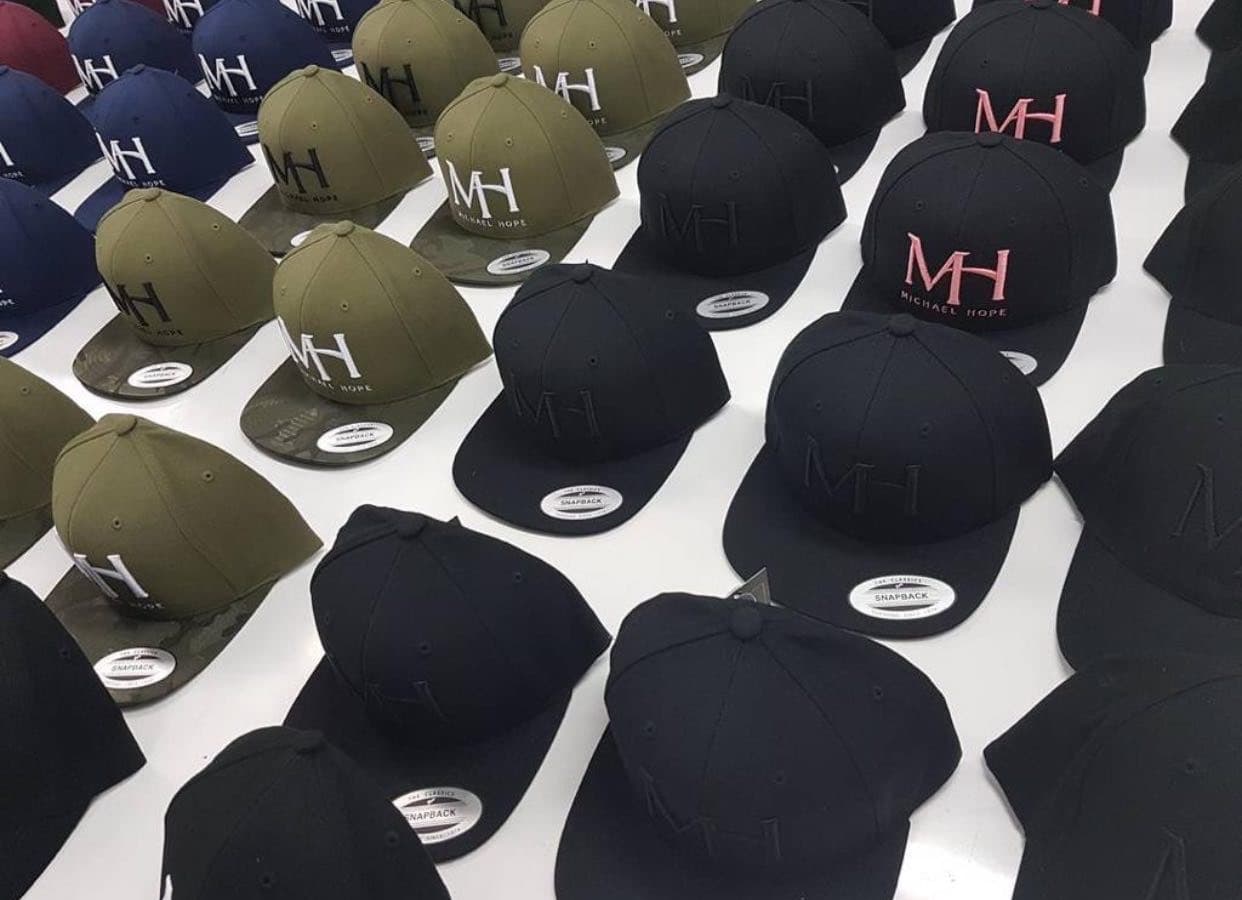
- Start with two to four core styles rather than a full range.
- Keep colors limited. One or two per style keeps you within per-color minimums without multiplying the order.
- Use the first run to learn which sizes and colors sell, then reorder those in larger quantities.
- Budget for samples. Most brands approve at least one fit sample and a pre-production sample before bulk. Our sampling and tech pack guide explains each stage.
- Plan cash for the whole order, including shipping and import duties, not just the factory price.
For a step-by-step plan, read how to launch a clothing brand with low MOQs.
Is MOQ negotiable? Seven ways to lower it
Often, yes. A minimum reflects a supplier's costs, so anything that reduces those costs can bring it down.

- Use stock fabrics and colors instead of custom-dyed fabric, so the mill's minimum does not apply.
- Order fewer colorways per style.
- Choose standard trims such as stock zips, buttons and drawcords, and keep custom labels simple.
- Accept a higher price per piece in exchange for a smaller run.
- Share one fabric across several styles, so its minimum is met across the collection.
- Agree a reorder plan. A supplier may take a small first run if larger repeat orders are likely.
- Work with a manufacturer set up for small runs rather than asking a high-volume factory to make an exception.
MOQ and other terms you will see on a quote
| Term | What it means |
|---|---|
| MOQ | Minimum order quantity: the fewest pieces per order, style or color. |
| MOV | Minimum order value: the minimum spend per order, whatever the quantity. |
| EOQ | Economic order quantity: an inventory formula for the order size that keeps the combined cost of ordering and storing stock lowest. |
| Proto sample | The first version of a garment, made to check the design and fit. |
| PP sample | Pre-production sample: the final approved garment that bulk production must match. |
| Bulk | The full production run. |
| Lead time | The time from order or sample approval to finished goods. |
How Nevear handles MOQ
Nevear's minimum is typically 50 pieces per item. That lets a new brand produce its own design, with its own pattern and labels, without committing to hundreds of units before it knows what sells. The exact minimum depends on the product, fabric and production process, and is confirmed in your quote.
The same flexibility suits established brands. You can test a new style at 50 pieces alongside your bestsellers, then move it into bulk runs of thousands once it has proved itself.
We work with partner factories in the UK, France, Germany and Croatia, as well as in China, the US and Canada, and choose the location that suits your product, quantity and timeline. See how low MOQ production works, or read what affects the price of custom clothing.