
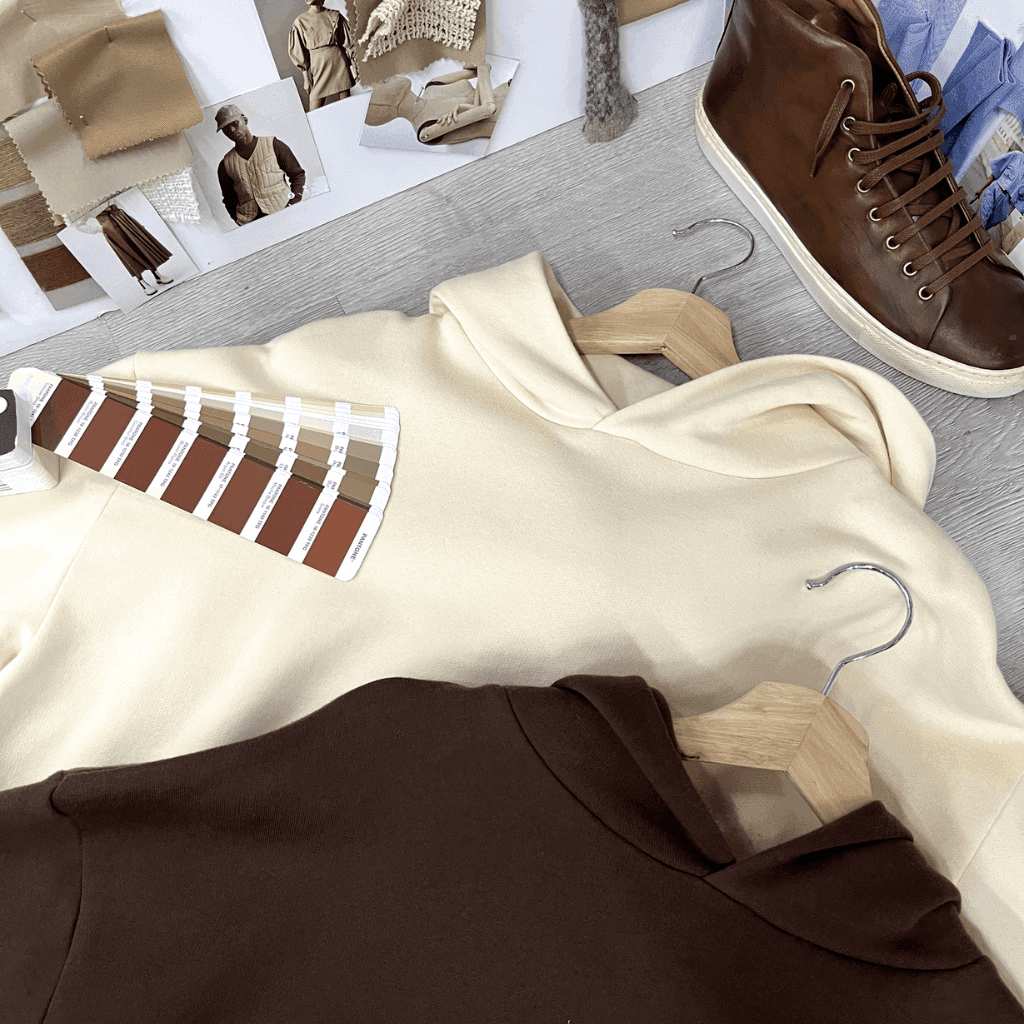
What French terry is
French terry is a knitted fabric with a smooth, flat face, like a heavy t-shirt jersey, and rows of small loops on the back. It is knitted on circular machines that lay an extra loop yarn into the back of the fabric. Many hoodie fabrics are made this way from three yarns: the face yarn, a binding yarn and the loop yarn, which is why mills call them three-end or three-thread fabrics.
The loops give French terry its slightly textured inside, its spring and its absorbency. It is not the same as towelling terry, a woven fabric that usually has loops on both sides. French terry is used for all-season hoodies, sweatshirts, joggers and shorts.
What fleece is
Sweatshirt fleece, often called brushed-back fleece, starts as a loopback knit like French terry. The inside is then run through brushing (napping) machines that tease the loops into a soft, fuzzy pile. The pile traps air, so the fabric is warmer for its weight and feels softer against the skin.
French terry and fleece in cross-section
French terry
Loops of yarn on the inside. Lighter and more breathable, for all-season hoodies and joggers.
Brushed fleece
The same loops brushed into a soft pile that traps air. Warmer and cosier, and it can pill.
Polar fleece is a different fabric: usually a polyester knit brushed and sheared on both sides, used for jackets and blankets rather than sweatshirts. When a hoodie is described as fleece, it almost always means brushed-back fleece.
French terry vs fleece at a glance
| French terry | Brushed fleece | |
|---|---|---|
| Inside | Visible loops | Soft brushed pile |
| Warmth | Moderate | Warmer for the same weight |
| Breathability | Higher | Lower |
| Typical weight | About 240–400 GSM | About 280–450 GSM |
| Look and drape | Cleaner and flatter; holds a crisp shape | Fuller and softer |
| Pilling and lint | Less | Brushed fibres can pill and shed lint in the first washes |
| Best season | All year, layering, warmer climates | Autumn and winter |
Brushing is an extra finishing step, and a brushed fleece of the same weight often feels thicker. Weight is given in GSM, grams per square metre; our GSM guide explains how to choose it.
Cotton, polyester or a blend?
- 100% cotton feels the most natural and breathes best, but it shrinks more unless the fabric is pre-shrunk, and brushed cotton fleece can lose some of its loft after many washes.
- Cotton-rich blends, such as 80/20 cotton/polyester, are the most common hoodie fabrics. The polyester helps the fabric hold its shape, shrink less and keep a brushed pile.
- Polyester-rich blends dry faster and suit sport warm-ups, but pills on polyester tend to stay attached rather than wash away, so ask for an anti-pill finish if it matters.
- Recycled polyester can replace virgin polyester in any of these; keep the certificate if you make a recycled claim.
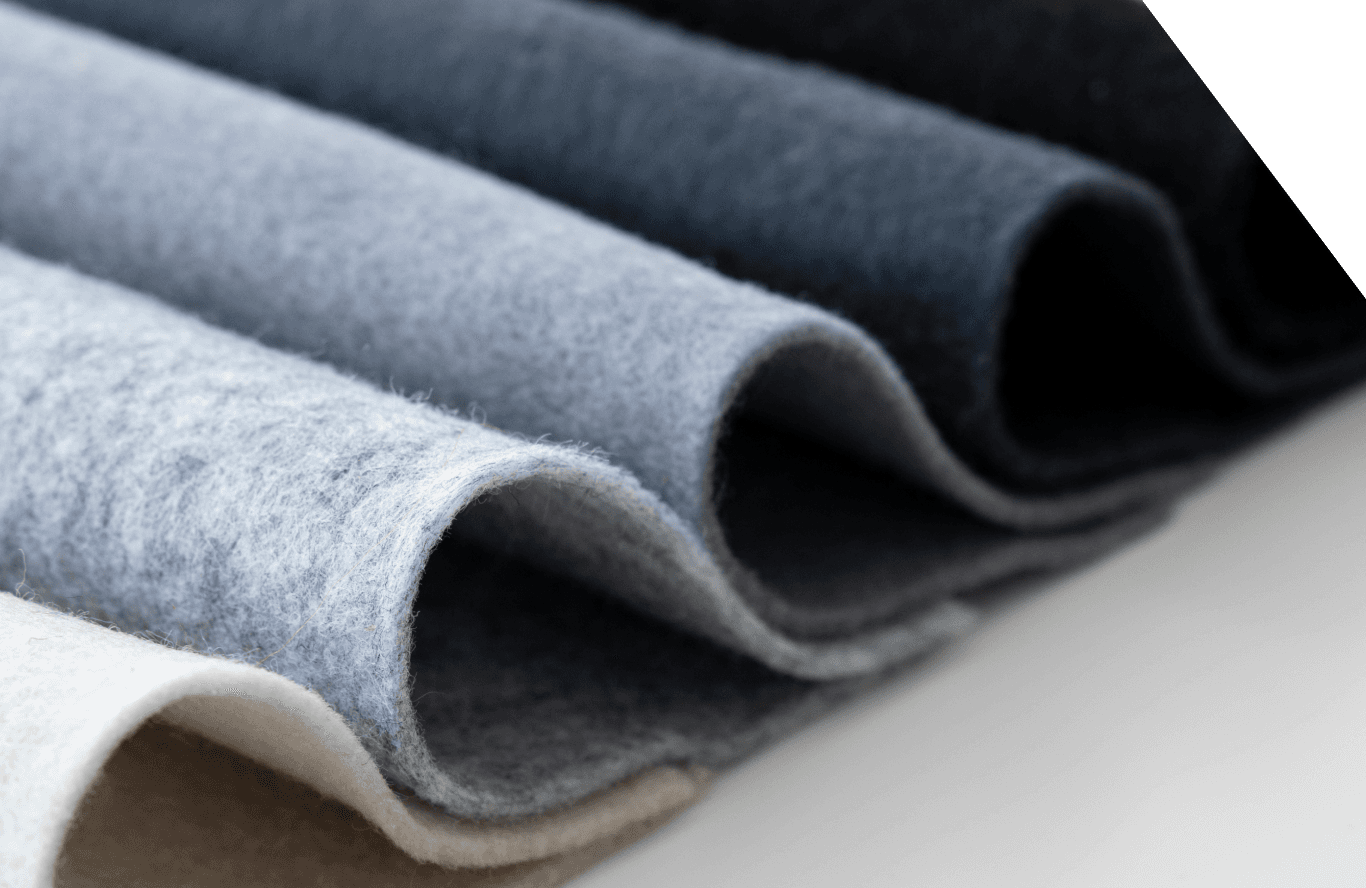
Which should you choose?
- An all-season hoodie or sweatshirt: French terry, about 280–350 GSM.
- A cosy winter hoodie: brushed fleece, about 320–400 GSM.
- Heavyweight streetwear: 400 GSM and up in either; terry gives a cleaner, boxier shape.
- Joggers and shorts: French terry; it drapes and breathes better on the legs.
- Warm climates and layering pieces: lighter French terry.
- Sport warm-ups: a polyester-blend terry that dries quickly.
Both fabrics take screen printing and embroidery well, because the print goes on the smooth face. On lighter terry, a dense embroidery design may need a stabiliser behind it; our embroidery vs screen printing guide explains the trade-offs.
How to specify it
- Write the fabric in full: for example "80/20 cotton/polyester brushed-back fleece, 340 GSM" or "100% cotton French terry, 300 GSM".
- Specify the rib for cuffs and hem, with its composition, and whether it contains elastane.
- Agree the shrinkage limit and ask for wash-test results, especially for 100% cotton.
- Approve it on the sample. Wash the sample a few times and compare it with the bulk.
At Nevear the minimum is typically 50 pieces per item, samples take 2–3 weeks, and bulk orders usually arrive 3–4 weeks from the order date, shipping included. Our hoodie page covers the styles we make.