
Knit vs woven: how each is made
Almost all clothing fabric is made in one of two ways. Weaving interlaces two sets of yarn at right angles. Knitting loops yarn through itself, row after row. You can see the difference with a magnifying glass, and it explains most of how a fabric behaves: how far it stretches, how it drapes, how it is cut and sewn, and even how customs classify the finished garment.
How each fabric is built
Woven
Two sets of yarn cross at right angles: the warp (blue) runs along the cloth and the weft (orange) goes over and under it. The yarns lie straight, so the fabric is firm.
Knit
One yarn is looped row after row, and each new row is pulled through the loops of the row before. The loops can open and close, so the fabric stretches.
What woven fabric is
Woven fabric is made on a loom. The warp yarns run along the length of the cloth and are held taut; the weft yarn passes over and under them across the width, one row at a time. Both sets of yarn lie straight, so a woven fabric is firm and keeps its shape. Its two finished edges are the selvedges, which our selvedge denim guide explains.
Most woven fabrics use one of three basic weaves, or a variation of one:
- Plain weave. Each weft yarn goes over one warp yarn and under the next. Poplin, chambray, voile and canvas are plain weaves.
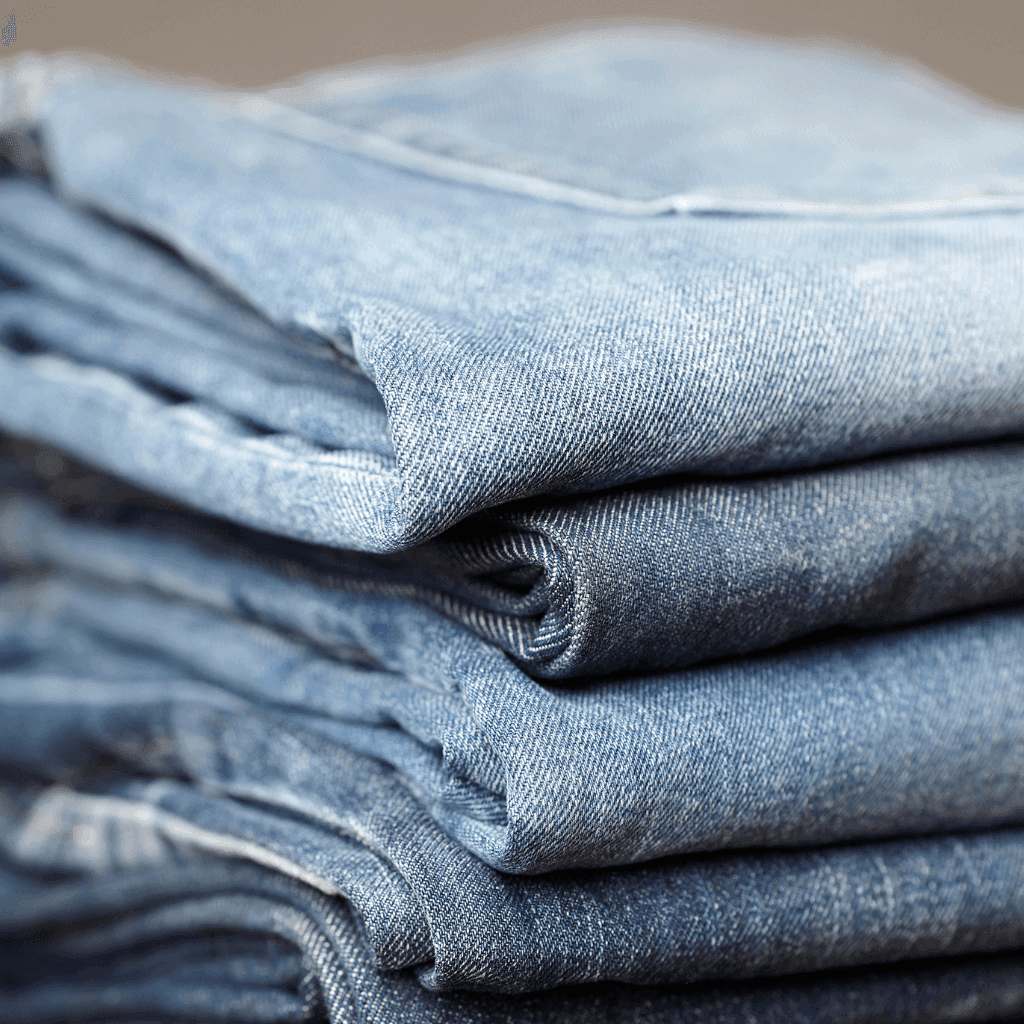
- Twill. The weft goes over two or more warp yarns, stepping along by one each row, which makes diagonal lines. Denim, chino twill and gabardine are twills.
- Satin. Yarns float over several others on the face, giving a smooth, lustrous surface. Sateen is a satin weave made from cotton.
What knit fabric is
Knit fabric is made from loops. In weft knitting, by far the more common kind, a yarn runs across the fabric making a row of loops, and each new row is pulled through the loops of the row before. The rows are called courses and the columns of loops are called wales; on a T-shirt, the wales are the tiny columns of Vs you can see on the face. Most clothing knits are weft knits, usually made on circular knitting machines: jersey, rib, interlock, piqué, and the French terry and fleece used for hoodies.
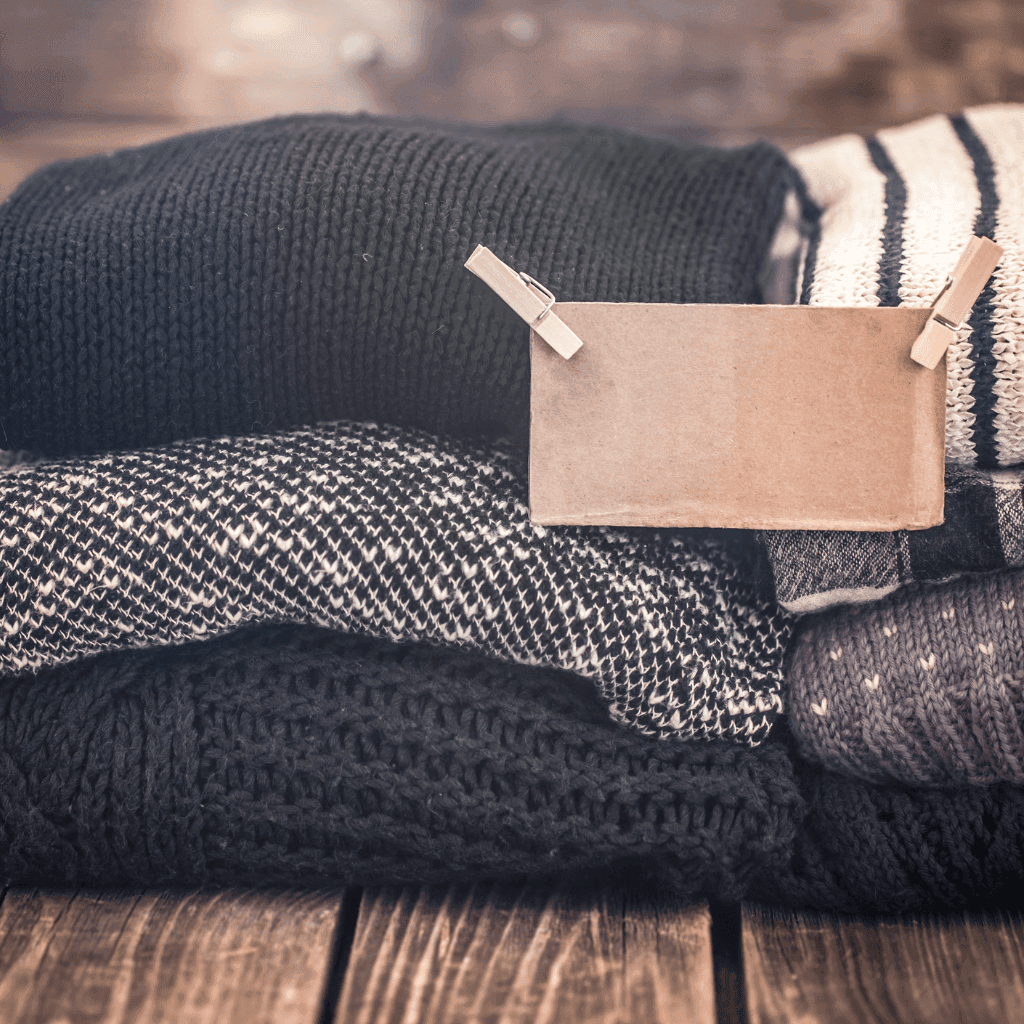
In warp knitting, many parallel yarns zigzag along the length of the fabric, each one forming a column of loops linked to its neighbours. Tricot and raschel are warp knits. They resist runs, so they are used for lingerie, linings, mesh, and some swimwear and sportswear fabrics.
Knit vs woven at a glance
| Knit | Woven | |
|---|---|---|
| How it is made | Yarn looped into rows on a knitting machine | Two sets of yarn interlaced at right angles on a loom |
| Stretch | Stretches, most across the width, and recovers | Little, except on the diagonal, unless it contains elastane |
| Shape | Soft and drapey; follows the body | Firm; holds a crease, a collar and a sharp line |
| Creasing | Resists creases | Creases more, especially cotton and linen |
| Cut edges | Do not fray; jersey edges curl | Fray unless the seam is finished |
| Fit | Pulls on; needs few openings or darts | Needs ease, darts or seams to shape it, and buttons or zips to get it on |
| Sewing | Overlock and coverstitch: stitches that stretch | Lockstitch, with overlocked, bound or flat-felled seams |
| Weight usually given in | GSM | GSM or ounces per square yard |
| Typical garments | T-shirts, hoodies, polos, leggings, swimwear | Jeans, chinos, button-up shirts, jackets |
| HS chapter for the garment | 61 | 62 |
How knits and wovens behave
Stretch is the biggest difference. A knit's loops can open up and close again, so a knit stretches even without elastane, most of all across its width. Rib knits stretch the most, which is why cuffs and collars are made from them. A woven's yarns already lie straight, so pulling along or across the cloth barely moves them. It gives a little on the diagonal, called the bias, which is why bias-cut skirts and dresses drape and cling.
The stretch test
Woven: barely moves
Pulled across, the straight yarns hardly give. A woven stretches a little on the diagonal, the bias, and properly only if the yarn contains elastane.
Knit: opens up and springs back
Pulled across, the loops widen and the fabric stretches, then recovers when you let go. How far depends on the knit and on any elastane.
Elastane changes the picture. A few percent in the yarn turns a woven into a stretch woven, such as stretch denim or stretch poplin, and helps a knit spring back to shape. Our spandex vs elastane guide gives typical amounts for each garment.
- Structure. A woven holds a crease, a crisp collar or a tailored shoulder. A knit drapes and follows the body, and a knit without elastane can bag at the knees and elbows.
- Edges. Cut wovens fray, so their seams are finished. Cut weft knits do not fray, but single jersey curls at the edges, and a pulled yarn can unravel along the row.
- Wear. Closely woven fabrics such as denim, canvas and twill resist abrasion and keep their shape. Knits snag more easily and, depending on the fibre, can pill.
- Shrinkage. Both shrink if the fibre does, cotton especially. Cotton knits often shrink more than cotton wovens, mostly in length, and single jersey can also twist. Wash-test the sample either way.
How to tell if a fabric is knit or woven
- Pull it across. If it stretches easily and springs back, it is almost certainly a knit. If it barely gives across or along but gives on the diagonal, it is a woven. A stretch woven also gives, so check the next two as well.
- Look closely at the surface. Use a magnifying glass or your phone camera. A knit shows columns of small Vs on the face or rows of loops on the back. A woven shows a grid of crossing yarns, or diagonal lines if it is a twill.
- Look at a cut edge. Pull a yarn from the edge of a woven and a single straight thread comes out, leaving a fringe. A knit's edge does not fringe: jersey rolls up, and a pulled yarn can unravel along the row.
- Read the fabric name. Jersey, rib, interlock, piqué, French terry, fleece and tricot are knits. Poplin, oxford, chambray, twill, denim, canvas, sateen and ripstop are wovens.
Which clothes are knit and which are woven
| Garment | Usually | Typical fabrics |
|---|---|---|
| T-shirts and tank tops | Knit | Single jersey, rib |
| Hoodies and sweatshirts | Knit | French terry, fleece |
| Polo shirts | Knit | Piqué, jersey |
| Leggings and sportswear | Knit | Jersey or interlock with elastane |
| Joggers and tracksuits | Knit | French terry, fleece, tricot |
| Swimwear | Knit | Nylon or polyester with elastane, often tricot |
| Jeans | Woven | Denim, a cotton twill |
| Chinos, cargos and work pants | Woven | Cotton twill, canvas, ripstop |
| Button-up shirts | Woven | Poplin, oxford, chambray, flannel |
| Jackets and windbreakers | Woven | Nylon or polyester ripstop and taffeta, twill, denim |
| Shorts | Either | Fleece or jersey for lounge shorts; twill or nylon for chino and board shorts |
| Dresses and skirts | Either | Jersey for stretch styles; poplin, twill or satin for structured or bias-cut ones |
Many garments use both. A bomber jacket is often a woven shell with rib-knit cuffs, collar and hem, and many windbreakers pair a woven shell with a knitted mesh lining. Each fabric is chosen for the job it does in that part of the garment.
What knit or woven changes in production
For a brand, the choice comes first, because the pattern, the sewing and the specification all follow from it.
- The pattern. A knit can be cut close to the body, or even smaller than it for leggings and swimwear, and a T-shirt needs no opening to pull on. A woven pattern needs ease to move in, darts or seams to shape it, and openings with buttons or zips. A pattern made for a knit cannot simply be cut in a woven, or the other way round.
- The sewing. Knits are sewn on overlock and coverstitch machines, whose stitches stretch with the fabric; activewear often uses flatlock seams, which lie flat against the skin. Wovens are sewn mainly with lockstitch, and their raw edges are overlocked, bound or enclosed in flat-felled seams, as on the inseam of jeans.
- The trims. Knit tops usually need rib for the neckline and cuffs. Woven shirts and jackets usually need interlining in the collar, cuffs and front placket, plus buttons or zips.
- The specification. Knits are described by knit type, fibre content and GSM, with limits on shrinkage and twist. Wovens are described by weave, fibre content and weight and, for shirting, often by construction too: the yarn counts and the number of threads per inch in each direction.
Knit or woven: the HS code and the origin rules
Customs treat knitted and woven clothing as different goods. Clothing made from knitted or crocheted fabric is classified in chapter 61 of the Harmonized System, and clothing made from other fabric, mostly woven, in chapter 62. The fabric decides, not the look: knitted trousers that look like chinos are still chapter 61. Our HS codes guide lists the codes for common garments.
How to specify knit or woven fabric in your tech pack
- Knit or woven, and the type. For example "single jersey", "brushed fleece", "2x2 rib", "cotton twill" or "poplin".
- Fibre content. Every fibre with its percentage, including any elastane.
- Weight. GSM for knits; GSM or ounces per square yard for wovens, with a tolerance. Our GSM guide explains both units.
- Stretch. For stretch fabrics, how much stretch and recovery you need, and in which direction.
- Shrinkage and twist. The maximum you accept after washing, checked on the sample.
- Finish and colour. Dye method, any wash, brushing or water-repellent finish, and a swatch or colour reference.
Our tech pack guide explains where this goes and includes a free template.
Knit and woven clothing from Nevear
Nevear makes both. Knitted T-shirts, hoodies, joggers, leggings, sportswear and swimwear; woven jeans, chinos and cargos from our pants range, and jackets. The minimum is typically 50 pieces per style, samples take 2–3 weeks, and bulk orders usually arrive 3–4 weeks from the order date, shipping included.
Send us your design or a reference garment, and your quote confirms the fabric options and the minimum for your exact spec. If you are planning a first run, read what MOQ means.