
Cut and Sew Manufacturer
Nevear is a cut and sew manufacturer for clothing brands. We make garments from scratch to your design, cut from fabric to a pattern made for your style and sewn to your specification, from a first run of 50 pieces per style to around 50,000 pieces in a single shipment.
Cut and sew is how a brand gets its own fit, fabric and labels instead of printing on a stock blank. Here is how it works, what to send us and what sets the price.
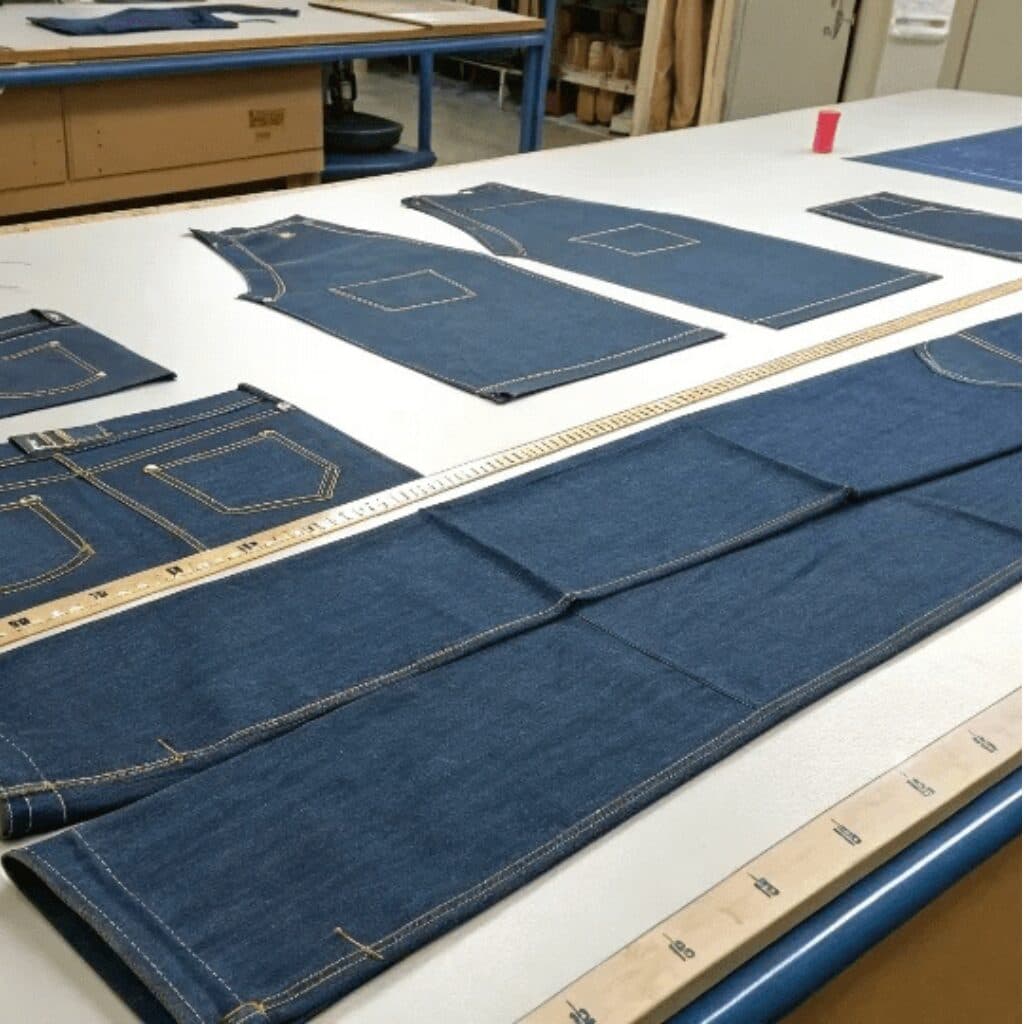
- Minimum order
- Typically 50 pieces per style
- Lead time
- Samples 2–3 weeks; bulk 3–4 weeks from order
- Production
- Partner factories in the US, UK, Pakistan and China
- Capacity
- Around 50,000 pieces in a single shipment
What cut and sew means
Cut and sew manufacturing means the garment is made from the fabric up. A pattern is made for your design and graded into your sizes, the fabric is cut to it, and the pieces are sewn together with your trims and labels. The alternative is decorating blanks: buying ready-made t-shirts or hoodies and adding a print or embroidery.
Three ways to make your first collection
Print on demand
- Typical minimum
- 1 piece
- Upfront cash
- Lowest
- Design control
- Low: stock blanks, your print
- Price per piece
- Highest
Decorated blanks
- Typical minimum
- Often 12–50 per design
- Upfront cash
- Low
- Design control
- Medium: your branding on a stock garment
- Price per piece
- Medium
Cut and sew
- Typical minimum
- Often 50–300 per style
- Upfront cash
- Higher
- Design control
- High: your pattern, fabric and labels
- Price per piece
- Lowest at volume
With cut and sew you choose the fit, the fabric and its weight, the colour, the details and the labels. That is what lets a brand stand apart, and what makes a fit repeatable from one season to the next.
What we make
Each product page explains the styles, fabrics and details you can specify:
- Tops: t-shirts, hoodies and sweatshirts and tank tops.
- Bottoms: joggers, pants, jeans, shorts and skirts.
- Outerwear and sets: jackets and tracksuits.
- Active and swim: sportswear, leggings and swimwear.
- Accessories: hats.
How cut and sew production works
- Your brief. A tech pack, or a reference garment and sketches, with sizes and quantities.
- Pattern and grading. A pattern is made for the base size and graded into the rest of your size range.
- Fabric and trims. Fabric, thread, zips, labels and packaging are sourced to your specification.
- Sample. A sample is made in 2–3 weeks so you can check fit, fabric and finish, and send comments.
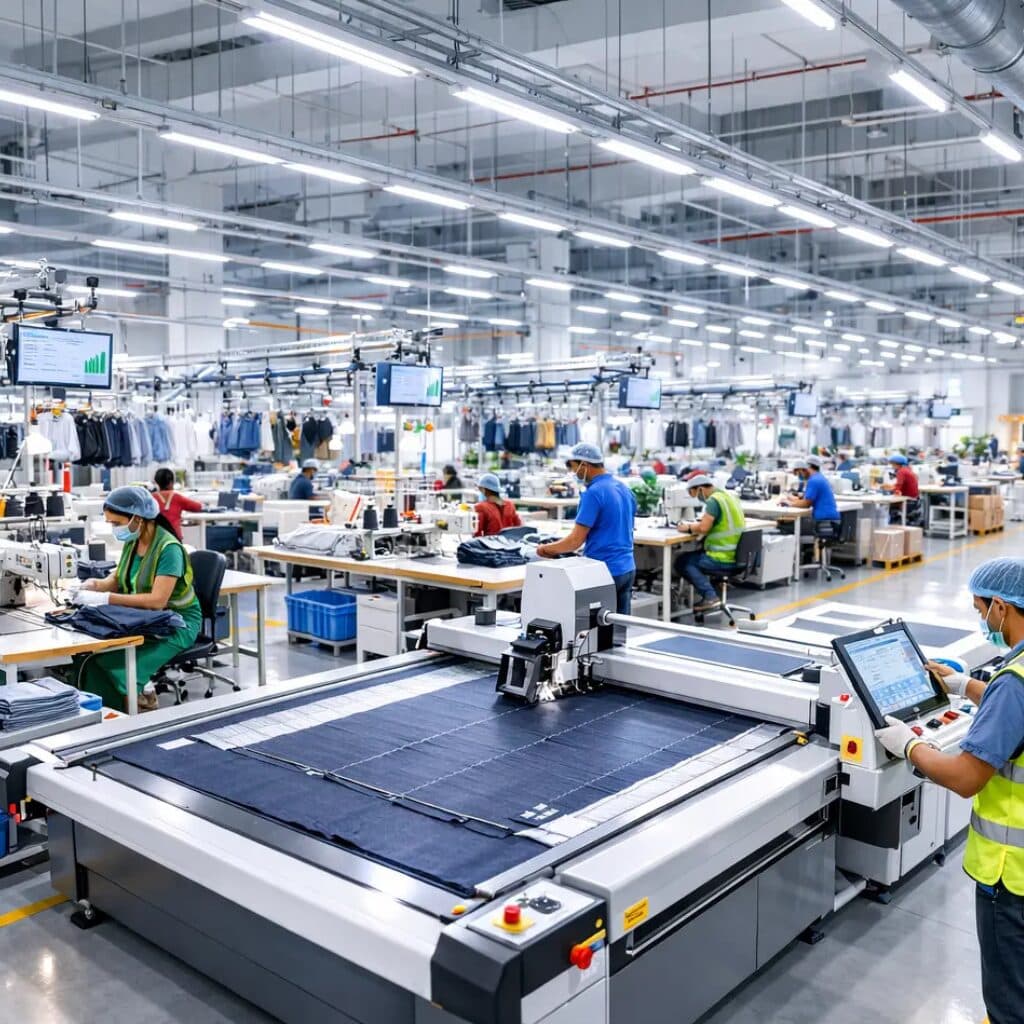
- Cutting. Once the sample is approved, the pattern pieces are laid out on the fabric to use it efficiently and cut, by hand or on an automated cutting table.
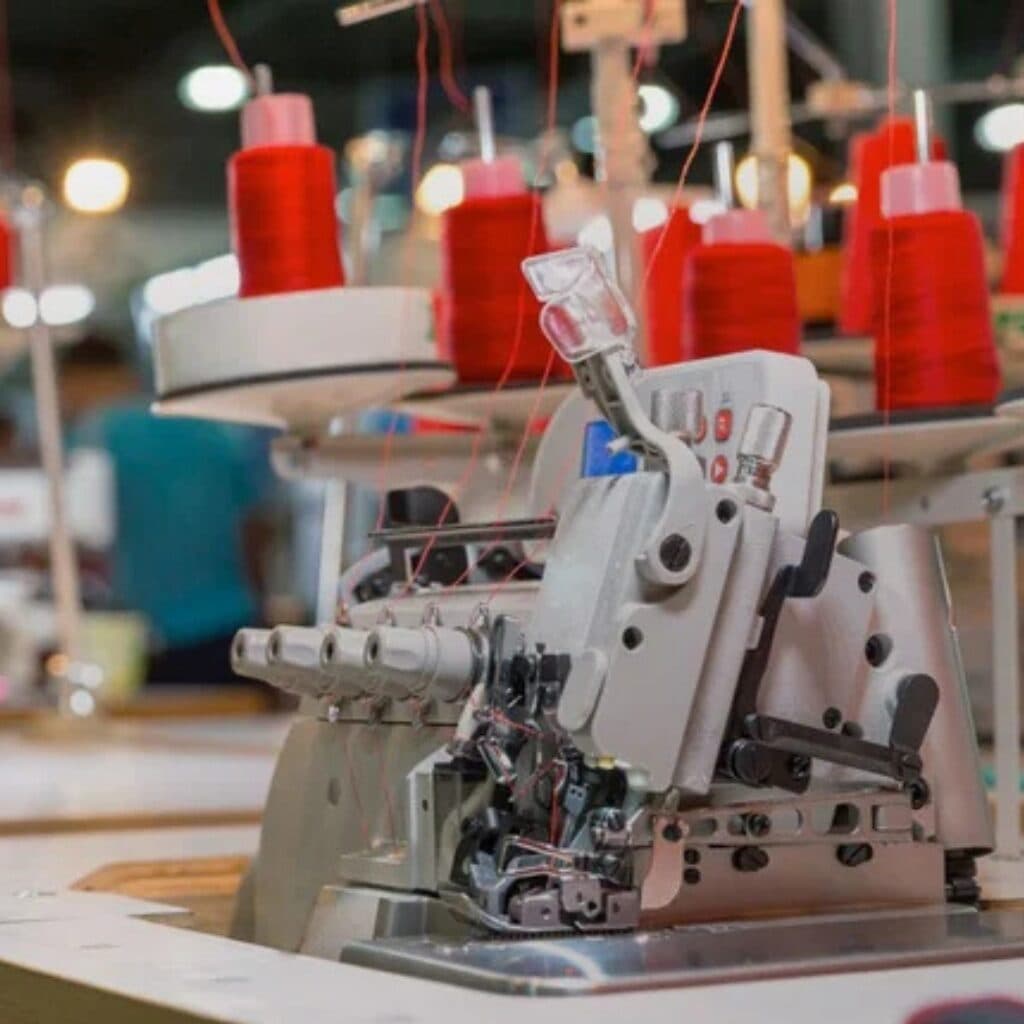
- Sewing. The pieces are assembled on lockstitch, overlock and coverstitch machines, and branding is added.
- Finishing and packing. Garments are washed if the spec calls for it, pressed, labelled, checked, folded and packed.
- Delivery. The bulk order usually arrives 3–4 weeks from the order date, shipping included.
What to send us
- A tech pack with flat sketches, measurements and the bill of materials. Our tech pack guide includes a free template.
- Or a reference garment whose fit you want to match, with notes on what to change.
- The fabric: composition and weight, for example 100% cotton French terry at 350 GSM. See what GSM means.
- Colours as Pantone references, and branding with the method you have in mind; our guides compare embroidery and screen printing and screen printing and DTG.
- Quantities per style and colour, split by size.
- Labels and packaging: neck label, care label, hangtags and polybags.
- Your target date and the country we deliver to.
What sets the price
- Fabric: the fibre, weight and any custom colour, and how much fabric the pattern uses.
- Construction: the number of panels, pockets, zips and seams, and how much sewing time they take.
- Trims and labels: zips, drawcords, woven labels, hangtags and packaging.
- Decoration: the print or embroidery method, its size and the number of colours.
- Quantity: setup costs are spread across more pieces on bigger runs. Our MOQ guide shows how.
- Where it is made: labour and freight costs differ by country, and so does the duty into your market.
Read how our pricing works for more on each of these. Your quote states the minimum, the price per piece, the production country and the timeline.
Where it is made, and why it matters
We produce through partner factories in the US, the UK, Pakistan and China, and choose the location that suits your product, quantity and timeline. The production country affects the duty you pay when the clothing arrives: for example, a garment made in the UK can enter the EU at 0% if it meets the rules of origin, while the same garment made in China pays 12%.
Our guides for the US, the UK, Canada, Australia and New Zealand list the duty by production country.
Frequently asked questions
What is cut and sew manufacturing?
Making garments from scratch: a pattern is made for your design, the fabric is cut to it and the pieces are sewn together with your trims and labels. It differs from printing or embroidering ready-made blanks.
What is the minimum order for cut and sew?
Typically 50 pieces per style. The exact minimum depends on the product, fabric and production process, and is confirmed in your quote.
How long does cut and sew production take?
Samples typically take 2–3 weeks. Once you approve the sample, bulk orders usually arrive 3–4 weeks from the order date, shipping included.
Is cut and sew the same as private label?
Not quite. Private label means the clothing carries your brand's labels; cut and sew means it is made to your own design. A cut and sew order can carry your own neck labels, care labels and hangtags too.
Can you work from a sample garment instead of a tech pack?
Yes. Send a reference garment whose fit you like, with notes on what to change, and we will confirm the details with you before sampling.
Ready to make your cut and sew clothing?
Tell us the style, fabric and quantity. We will confirm the minimum, a sample timeline and the price per piece in your quote.