
Clothing Manufacturer for Australian Brands
Nevear makes custom clothing for Australian brands, from a first run of 50 pieces per item to bulk orders of thousands. You bring the design; we handle sampling, production and delivery to Australia.
This page covers what is specific to producing for the Australian market: import duty and GST, the labelling rules, and how the southern-hemisphere seasons shape your timeline.
- Minimum order
- Typically 50 pieces per item
- Duty on clothing
- 5%, or free from the UK, China, the US and Canada under trade agreements
- GST at the border
- 10% on consignments over A$1,000
- Labels required
- A care label; fibre and origin claims must be accurate
Why Australian brands work with Nevear
- Small first runs. Our minimum is typically 50 pieces per item, so you can launch or test a style without committing to hundreds of units. Read what MOQ means for how order size affects price.
- Room to grow. The same pattern and approved sample carry through to repeat orders in the thousands.
- A choice of production countries. Our partner factories are in the UK, France, Germany, Croatia, China, the US and Canada. For Australia, that choice also sets your import duty, as the table below shows.
- Your brand on every piece. Custom labels and hangtags, with the care instructions Australian law requires.
We make sportswear, swimwear, t-shirts, hoodies, shorts, jackets, children's clothing and caps, for brands across Australia including Melbourne.
Import duty and GST on clothing into Australia
Most clothing imported into Australia pays 5% customs duty, but Australia's trade agreements remove it for goods made in several of our production countries.
| Where the clothing is made | Duty into Australia | Why |
|---|---|---|
| UK | Free | Australia–UK Free Trade Agreement |
| China | Free | China–Australia Free Trade Agreement |
| US | Free | Australia–United States Free Trade Agreement |
| Canada | Free | CPTPP (Canada is a member) |
| France, Germany, Croatia | 5% | The Australia–EU agreement was concluded in March 2026 but is not yet in force |
GST of 10% is charged on the customs value plus international transport and insurance, plus the duty. Consignments worth more than A$1,000 need a full import declaration, and duty and GST are paid before release; most businesses use a customs broker. If your business is registered for GST, you can usually claim the GST back. Goods worth A$1,000 or less are generally free of duty and GST at the border.
Labelling rules for clothing sold in Australia
- Care label (mandatory). Under the Consumer Goods (Care Labelling) Information Standard 2023, based on AS/NZS 1957, clothing needs a permanent care label. The wording must be in English and clearly legible, and the international care symbols can be used.
- Fibre content (voluntary, but must be accurate). Australia has no mandatory fibre labelling standard, but a fibre label that overstates or misstates content can breach consumer law, and the ACCC has acted on this.
- Country of origin (voluntary, but must be accurate). Australian law does not require an origin label on clothing, but any "Made in" claim must not be false or misleading.
If you also sell in New Zealand, fibre content and country of origin labels are mandatory there; see our New Zealand guide. Putting all three on every label is the simplest way to sell in both.
Planning production around Australian seasons
Australia's seasons run opposite to Europe's and North America's: winter is June to August and summer is December to February. Work back from the date your stock needs to be on the shelf.
Southern-hemisphere seasons and when to have stock ready
Winter range in stock: Mar to May · Hoodies, jackets, knitwear
Summer range in stock: Sep to Nov · Tees, shorts, swimwear, activewear
- Summer ranges (swimwear, activewear, tees, shorts): aim for stock by spring, September to November.
- Winter ranges (hoodies, jackets, fleece): aim for stock by autumn, March to May.
- Allow time for each stage. Samples typically take about two weeks per round, then fit changes, bulk production and shipping. Ask for production and delivery dates in your quote.
- Watch the holidays. Factories in China close for Lunar New Year, and Christmas slows shipping everywhere, so book summer ranges early.
Swimwear and activewear
Swimwear and activewear are among the most searched clothing manufacturing categories in Australia. Both rely on stretch fabrics and specialist stitching such as coverstitch and flatlock seams, so a fit sample matters even more than for a t-shirt.
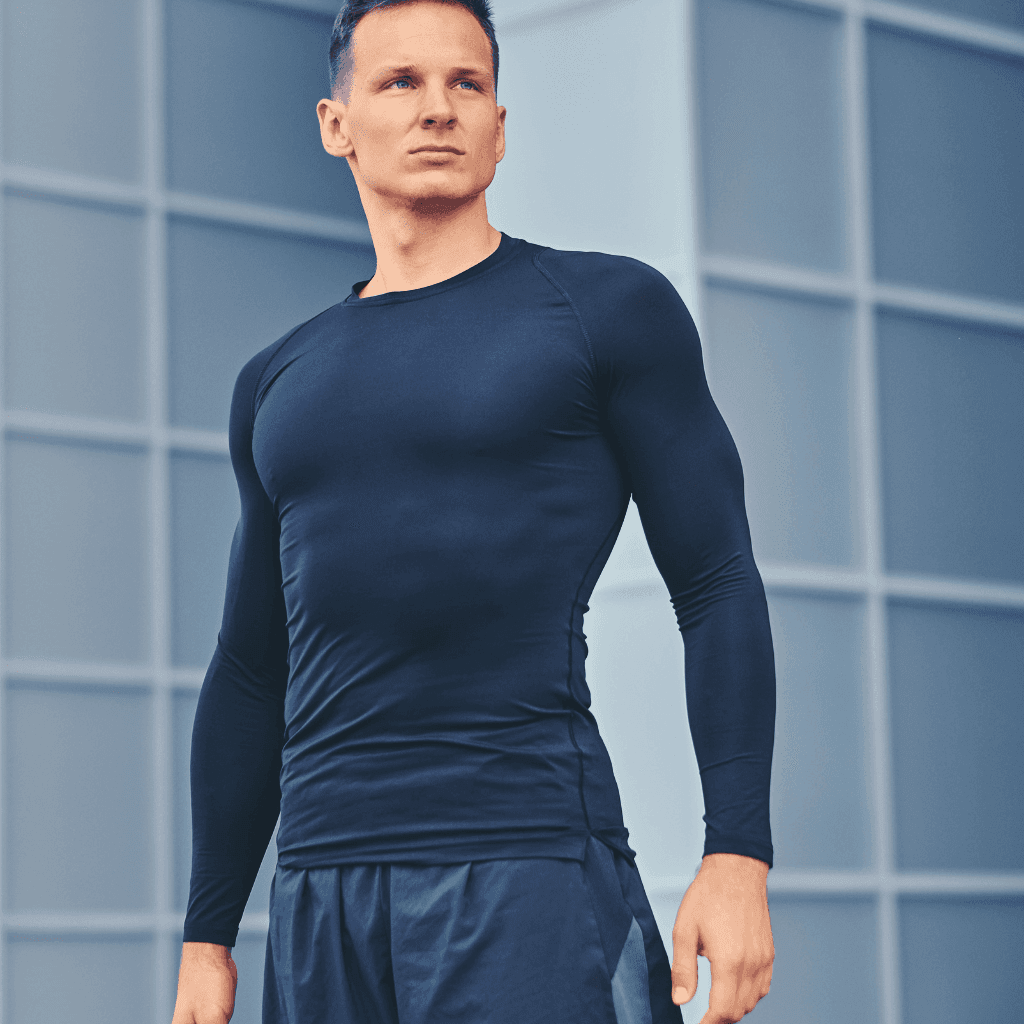
Put the fabric composition, weight and stretch in your tech pack, and test the sample through a few washes before you approve it. See our sportswear page for what we make.
Sizing for Australian customers
Australia uses the same clothing size labels as New Zealand. Women's sizes (8, 10, 12 and so on) are close to UK sizing but different from US sizing, so a US size chart will confuse Australian shoppers.
Put your size system and full measurements in the tech pack. Our sampling and tech pack guide explains what to include.
How an order works
- Send your design, tech pack or a reference garment, with quantities and the date you need stock in Australia.
- We quote, including the minimum for each item and the production country we recommend.
- We make a sample so you can check the fit, fabric and labels.
- Once you approve the sample, bulk production starts.
- We ship the finished order to you in Australia.
See what affects the price of custom clothing, or how low MOQ production works.
Frequently asked questions
Is Nevear based in Australia?
No. Nevear Apparel LLC is a US company, based in Wyoming, that works with partner factories in the UK, France, Germany, Croatia, China, the US and Canada. We make clothing for Australian brands and ship it to Australia.
What is the minimum order?
Typically 50 pieces per item. The exact minimum depends on the product, fabric and production process, and is confirmed in your quote.
Do I pay duty on clothing imported into Australia?
The general rate on most clothing is 5%. Clothing made in the UK, China, the US or Canada can enter duty-free when it meets the relevant trade agreement's rules of origin. GST of 10% applies on top for consignments over A$1,000.
What labels does clothing need in Australia?
A permanent care label with clear care instructions in English, which can use the international care symbols. Fibre content and country of origin labels are not mandatory, but any you add must be accurate.
Do you make swimwear and activewear?
Yes, along with t-shirts, hoodies, shorts, jackets, children's clothing and caps.
Sources
- Australian Border Force: Current tariff, Schedule 3, Chapter 61
- Australian Border Force: Current tariff, free trade agreement schedules
- DFAT: Australia–European Union Free Trade Agreement (not yet in force)
- Australian Border Force: GST and other taxes when importing
- Consumer Goods (Care Labelling) Information Standard 2023
- ACCC: Country of origin claims
Facts checked on . Rules change, so confirm with the source before you rely on them.
Making clothing for Australia?
Tell us what you want to make and how many pieces. We will confirm the minimum, the best production country and a timeline in your quote.