
Clothing Manufacturers in the USA
Nevear Apparel LLC is a US company, based in Wyoming, that regularly makes custom clothing for American brands, from a first run of 50 pieces per item to bulk orders of around 50,000 pieces in a single shipment. We work with partner factories in the United States, as well as in the UK, Pakistan and China.
This page covers what matters when you produce for the US market: making in the USA or importing, the duties that apply in 2026, the FTC labeling rules, and how an order works.

- Minimum order
- Typically 50 pieces per item
- Made in the USA
- US partner factories, so no import duty
- Duty on cotton T-shirts
- 26.5% from the UK or Pakistan, 36.5% from China
- Labels required
- Fiber content, country of origin, maker identity and care
Why US brands work with Nevear
- A US company. You deal with an American business, Nevear Apparel LLC, from the first quote to delivery.
- Small first runs. Our minimum is typically 50 pieces per item, so you can launch or test a style without committing to hundreds of units. Read what MOQ means for how order size affects price.
- Made in the USA or abroad. Produce with our US partner factories, which avoids import duties, or overseas when that suits the product and budget. The table below shows what each choice costs at the border.
- Room to grow. The same pattern and approved sample carry through to repeat orders of up to around 50,000 pieces in a single shipment.
We make t-shirts, hoodies, jeans, jackets, sportswear, tracksuits, shorts and hats, for brands across the country, including in Los Angeles, Nashville, Austin, Seattle, Columbus and Las Vegas.
Made in the USA or imported: what you pay at the border
Clothing made in the USA pays no import duty. Imported clothing pays the base duty in the US tariff schedule, which is high for apparel. Since July 24, 2026, goods from most countries also pay an additional tariff under Section 301, which is added to the base duty.
| Where the clothing is made | Duty into the US | How it adds up |
|---|---|---|
| USA | None | No import. Labeled "Made in USA" only when the garment is made in the US from US materials. |
| UK | 26.5% | 16.5% base duty + the 10% Section 301 tariff on UK goods. |
| Pakistan | 26.5% | 16.5% base duty + the 10% Section 301 tariff on goods from Pakistan. |
| China | 36.5% | 16.5% base duty + the 12.5% Section 301 tariff of July 2026 + the older 7.5% Section 301 tariff on most Chinese clothing. |
For example, cotton T-shirts from Pakistan with a customs value of $10,000 pay $2,650 in duty. Shipped by sea, the importer also pays a merchandise processing fee of 0.3464% ($34.64) and a harbor maintenance fee of 0.125% ($12.50), so about $2,697 in all. For entries from October 1, 2026, the processing fee is at least $34.58 and at most $670.86 per formal entry, and air shipments pay no harbor fee.
Commercial shipments are entered through US Customs by the importer of record, usually with a licensed customs broker. There is no federal sales tax or VAT at the border. To have the duty and shipping handled for you, see how DDP shipping works, and add everything up with our landed cost guide.
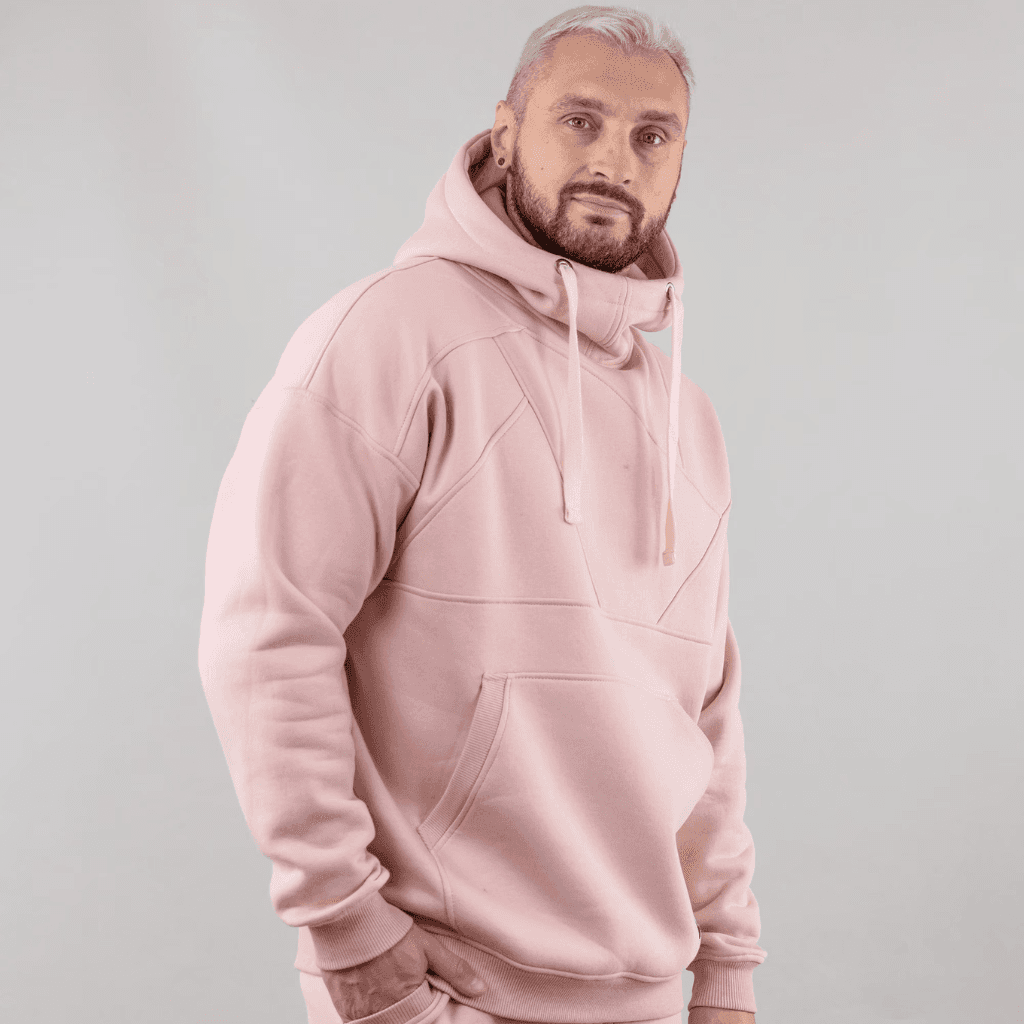
Base duty by type of clothing
The base duty depends on the garment and what it is made of. Synthetic fabrics carry much higher rates than cotton: a polyester T-shirt or hoodie pays 32%, nearly twice the cotton rate, which matters for sportswear and performance fabrics.
| Product | HTS code | Base duty |
|---|---|---|
| Cotton T-shirts | 6109.10.00 | 16.5% |
| Polyester T-shirts | 6109.90.10 | 32% |
| Cotton hoodies and sweatshirts | 6110.20.20 | 16.5% |
| Polyester hoodies and sweatshirts | 6110.30.30 | 32% |
| Men's knitted cotton joggers and shorts | 6103.42.10 | 16.1% |
| Men's knitted polyester joggers and shorts | 6103.43.15 | 28.2% |
| Cotton denim jeans, men's and women's | 6203.42.45, 6204.62.80 | 16.6% |
The country tariffs from the first table are added to these rates: 10% for the UK and Pakistan, and 12.5% for China. Every product in this table is also on the list that pays the extra 7.5% when made in China, so a polyester hoodie from China pays 52% (32% + 12.5% + 7.5%), against 42% from the UK or Pakistan. Our guide to HS codes for clothing explains how fabric and construction decide the code.
FTC labeling rules for clothing sold in the US
Clothing sold in the US must be labeled under the Textile Fiber Products Identification Act and the FTC's Care Labeling Rule. Plan these into your label artwork before production.
- Fiber content. Each fiber by its generic name and percentage by weight, largest first. Fibers under 5% are usually grouped as "other fiber".
- Country of origin. On the front of the label, at the inside center of the neck on garments with a neck. Imported clothing names the country where it was made; "Made in U.S.A." is only for clothing made in the US of US materials, and US-made clothing with imported fabric says "Made in U.S.A. of imported fabric".
- Maker identity. Your company name or your Registered Identification Number (RN).
- Care instructions. Required on a permanent label under the Care Labeling Rule.
- In English. Other languages can be added alongside.
Sizing for US customers
US size labels (women's 0, 2, 4 and so on, and S to XXL) differ from UK, European and Australian sizes. Put your size system and full measurements in the tech pack so samples and labels match.
Our sampling and tech pack guide explains what to include.
How an order works
- Send your design, tech pack or a reference garment, with quantities and the date you need stock.
- We quote, including the minimum for each item and whether we recommend US or overseas production.
- We make a sample so you can check the fit, fabric and labels.
- Once you approve the sample, bulk production starts.
- We deliver the finished order to you.
See what affects the price of custom clothing, or how low MOQ production works.
Working with brands in the US
You do not need to visit a factory to work with us. We run each order with you remotely, from the first quote to delivery at your door in the US.
- One point of contact throughout, by email or WhatsApp.
- Your quote names the production country, so you always know where your clothing is made. Our partner factories are in the US, the UK, Pakistan and China.
- A sample in your hands before bulk production, so you can check the fit, fabric and finish yourself.
- Shipping included in the bulk lead time of 3–4 weeks from the order date. Ask for a delivered duty paid quote if you want the import handled for you.
- Reorders from typically 50 pieces per style, so you can restock what sells.
Frequently asked questions
Do you work with brands in the US?
Yes. We regularly work with clothing brands in the US and deliver orders to your door. Nevear Apparel LLC is a US company registered in Wyoming, and production runs through our partner factories in the US, the UK, Pakistan and China, so your quote always names where your clothing is made.
Is Nevear a US company?
Yes. Nevear Apparel LLC is a US company based in Wyoming. We work with partner factories in the United States, as well as in the UK, Pakistan and China.
Can you make clothing in the USA?
Yes, through our US partner factories. US production avoids import duty, and garments made in the US of US materials can be labeled "Made in U.S.A.".
What is the minimum order?
Typically 50 pieces per item. The exact minimum depends on the product, fabric and production process, and is confirmed in your quote.
How much duty is there on imported clothing?
It depends on the product and the country. Cotton T-shirts carry a 16.5% base duty and polyester T-shirts 32%. Since July 24, 2026, a Section 301 tariff is added for most countries: 10% for the UK and Pakistan, and 12.5% plus a further 7.5% for most clothing from China. So cotton T-shirts pay 26.5% from the UK or Pakistan and 36.5% from China.
What fees are there on top of duty?
A merchandise processing fee of 0.3464% of the value, at least $34.58 and at most $670.86 per formal entry from October 1, 2026, plus a harbor maintenance fee of 0.125% for goods that arrive by sea. A customs broker usually charges for filing the entry too.
What labels does clothing need in the US?
Fiber content, country of origin and your company name or RN number, all in English, plus a permanent care label.
Sources
- US International Trade Commission: Harmonized Tariff Schedule, 2026 Revision 23 (chapters 61 and 62; 9903.05.31, 9903.05.62, 9903.05.81 and 9903.88.15)
- Federal Register: USTR Section 301 actions on forced labor import bans (July 28, 2026)
- Federal Register: Presidential memorandum on the Section 301 actions (July 23, 2026)
- Federal Register: Proclamation imposing a temporary import surcharge (February 25, 2026)
- Federal Register: Customs user fees adjusted for inflation in fiscal year 2027 (July 31, 2026)
- eCFR: 19 CFR 24.24, harbor maintenance fee
- FTC: Threading Your Way Through the Labeling Requirements Under the Textile and Wool Acts
Facts checked on . Rules change, so confirm with the source before you rely on them.
Related guides
- Clothing manufacturing for Los Angeles brands
- Clothing manufacturing for New York brands
- Clothing manufacturing for Chicago brands
- Clothing manufacturing for Houston brands
- Clothing manufacturing for Miami brands
- Clothing manufacturing for Atlanta brands
- Clothing manufacturing for Dallas brands
- Clothing manufacturing for Austin brands
- Clothing manufacturing for Nashville brands
- Clothing manufacturing for Las Vegas brands
- Clothing manufacturing for San Diego brands
- Clothing manufacturing for Seattle brands
- Clothing manufacturing for Phoenix brands
- Clothing manufacturing for Columbus brands
- Clothing manufacturing for Oklahoma City brands
- Private label clothing for Washington, DC
- Producing for Canada
- MOQ meaning: minimum order quantity explained
- Low MOQ clothing manufacturer
- Private label clothing manufacturer
- Clothing manufacturer for startups
- Bulk clothing manufacturer
Making clothing for the US?
Tell us what you want to make and how many pieces. We will confirm the minimum, the best production country and a timeline in your quote.